How Importers and Exporters Use Stablecoin Cross-Border Payments
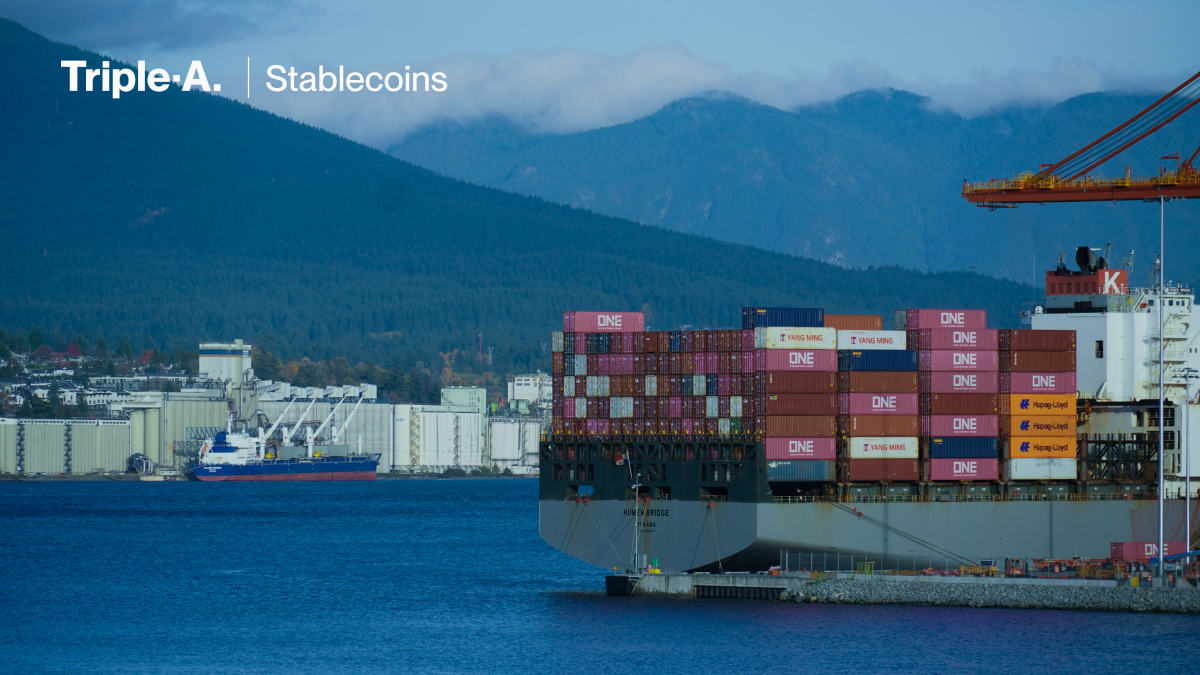
For importers and exporters, cross-border payments remain one of the biggest friction points in global trade. International bank wires can take several days to settle, incur high fees, and depend on correspondent banking networks that don’t always function reliably - especially in emerging or less common trade corridors.
These payment challenges don’t just slow transactions. They limit which markets businesses can sell to or source from. Stablecoin cross-border payments have emerged as a practical solution, enabling businesses to move value globally with greater speed, efficiency, and reach - with avenues to still settle in local currencies and remaining compliant.
The limitations of traditional cross-border payments
Most international trade payments still rely on correspondent banking systems. While familiar, these systems introduce several inefficiencies for importers and exporters operating across borders.
Common challenges include:
- Settlement times that stretch across multiple business days
- High and often opaque intermediary fees
- Limited transparency into payment status
- Difficulty paying or collecting funds in certain regions
For exporters, this can mean delayed cash flow and lost sales opportunities. For importers, it can restrict supplier options and increase procurement costs.
What are stablecoin cross-border payments?
Stablecoins are digital assets designed to maintain a stable value by being pegged to local currencies such as the US Dollar or Euro. When used for payments, stablecoins enable instant settlement across borders, bypassing many of the intermediaries involved in traditional bank transfers.
Stablecoin cross-border payments combine the efficiency of blockchain-based settlement with regulated financial infrastructure. This allows businesses to benefit from faster and more predictable payments without abandoning their existing treasury or accounting practices.
How exporters benefit when they accept stablecoin payments
Exporters often face challenges collecting payments from international customers, particularly in emerging markets across LATAM, Africa and SEA where banking access is limited or cross-border transfers are expensive.
By choosing to accept stablecoin payments, exporters can:
- Receive payments globally without relying on local banking infrastructure
- Settle faster compared to traditional wire transfers
- Lower foreign exchange and payment processing costs
- Expand into new markets without opening local bank accounts
With a regulated payment provider, exporters can accept stablecoin payments while settling in their local currency. This means they don’t need to hold digital assets or manage price volatility, while still benefiting from the efficiency of stablecoin rails.
How importers pay international suppliers using stablecoins
Importers sourcing goods or services globally often encounter delays and high costs when paying overseas suppliers. In some regions, correspondent banking limitations make payments slow or unreliable.
Stablecoins offer an alternative way to pay international suppliers quickly and transparently. This allows importers to:
- Pay suppliers and vendors in new or hard-to-reach markets
- Improve supplier relationships through faster settlement
- Reduce reliance on international wire transfers
- Streamline cross-border procurement operations
Crucially, importers don’t need to hold stablecoins themselves. Payments can be funded in local currency, while suppliers receive stablecoins depending on their preference.
The importance of regulation and compliance
For international trade, speed alone isn’t enough. Payments must also be compliant, secure, and reliable.
Triple-A is a multi-licensed financial institution, holding a Major Payment Institution license from the Monetary Authority of Singapore, registration as a Money Services Business with FinCEN in the United States, multiple US state Money Transmitter Licenses, and authorization as a Payment Institution in France. Triple-A is also registered as a Digital Asset Service Provider with the AMF under the supervision of the Banque de France.
This regulatory foundation enables businesses to use stablecoin cross-border payments with confidence, knowing that compliance and risk management are embedded into the payment flow.
One platform for global trade payments
Triple-A supports a wide range of cross-border payment use cases for importers and exporters:
- Accept stablecoin payments from customers while settling in local currencies
- Payout stablecoins to suppliers, vendors, employees, or partners while funding in local currencies
- Payout local currencies while funding in local currencies or stablecoins
This flexibility allows businesses to expand globally without changing how they manage domestic cash flows.
Expanding global trade with stablecoins
For importers and exporters, payments should enable growth—not constrain it. Stablecoin cross-border payments make it possible to transact with more markets, settle faster, and reduce costs, all while maintaining regulatory compliance and operational simplicity.
As global trade continues to evolve, stablecoins have also evolved into a practical tool for businesses looking to operate internationally without the friction of traditional payment rails.
If you’d like to explore Triple-A’s solutions, please head to our Contact Us page and a representative will assist you shortly!