How Digital Currency Payments Work
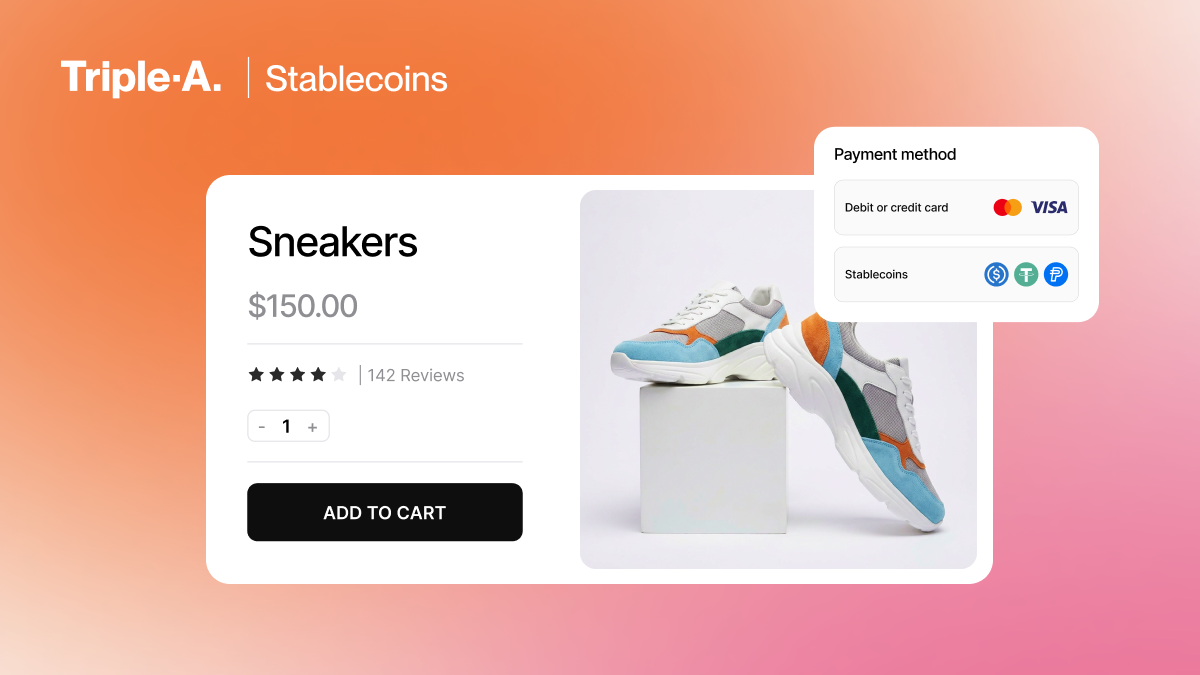
Digital currency payments allow customers to pay businesses using assets such as stablecoins and other digital currencies directly from a digital wallet.
For the customer, the experience can be similar to paying with another online payment method: they select digital currency at checkout, open their wallet and confirm the transaction.
Behind the scenes, the payment provider handles the blockchain transaction, payment confirmation, and, where required, conversion into the merchant’s preferred local currency.
This means a business can accept digital currency payments without necessarily holding digital currencies or managing wallets itself.
What is digital currency?
Digital currency is money or an asset that exists electronically and can be transferred between users through digital networks.
Some digital currencies, such as Bitcoin, have a market-driven price that can fluctuate significantly. Stablecoins such as USDT and USDC are designed to maintain a stable value, typically by being pegged to a fiat currency such as the US dollar.
For payments, stablecoins are increasingly used because they combine blockchain-based transfers with a predictable value.
What is a digital currency payment gateway?
A digital currency payment gateway connects a business's checkout with blockchain payment networks.
It lets customers pay from their digital currency wallets while the payment provider handles the technical infrastructure needed to process and confirm the transaction.
Depending on the provider and setup, the business may then receive settlement in:
- stablecoins or another supported digital currency; or
- local currency directly into its bank account.
With Triple-A, businesses can accept digital currency payments without managing digital currency wallets, conversion, or blockchain reconciliation themselves.
How do digital currency payments work?
A digital currency payment typically follows five steps.
1. The customer selects digital currency at checkout
The customer chooses digital currency as their payment method when purchasing a product or service.
The amount due is displayed in the supported digital currency, based on the exchange rate applied at the time of payment.
2. A payment request is generated
The payment gateway generates the information required to complete the transaction, including:
- payment amount
- selected digital currency
- blockchain network
- destination address
- QR code
The exchange rate can be locked for a defined period so the customer knows exactly how much to send.
3. The customer confirms the payment from their wallet
The customer scans the QR code or opens the payment request from their digital wallet.
Where supported, the amount and destination address populate automatically, reducing the risk of entering payment details incorrectly.
The customer reviews the transaction and confirms the payment.
4. The transaction is confirmed
The payment is transmitted over the relevant blockchain network.
Once the required confirmation conditions are met, the payment provider confirms the transaction to the merchant.
For the business, this means the order can be updated automatically without manually checking blockchain transactions.
5. The merchant receives settlement
The merchant receives settlement based on its configured setup.
For example, a customer may pay in USDT while the business receives EUR, USD, or another supported local currency in its bank account.
The payment provider handles the digital currency leg, conversion, and settlement behind the scenes.
How can businesses accept digital currency payments?
Businesses can usually integrate digital currency payments into their existing payment flow rather than building blockchain infrastructure themselves.
With Triple-A, businesses can accept payments through several options, including:
Hosted checkout
Customers are redirected to a secure payment page where they select their digital currency and complete the transaction.
Embedded checkout
Businesses can integrate the payment experience directly into their website or application.
API integration
Businesses that want greater control over the payment experience can integrate directly with Triple-A's APIs.
Payment links and invoices
Businesses can also accept digital currency without a traditional e-commerce checkout by sending customers an invoice or payment link.
This can be particularly useful for B2B payments, higher-value transactions, and services sold outside an online store.
What does the customer experience look like?
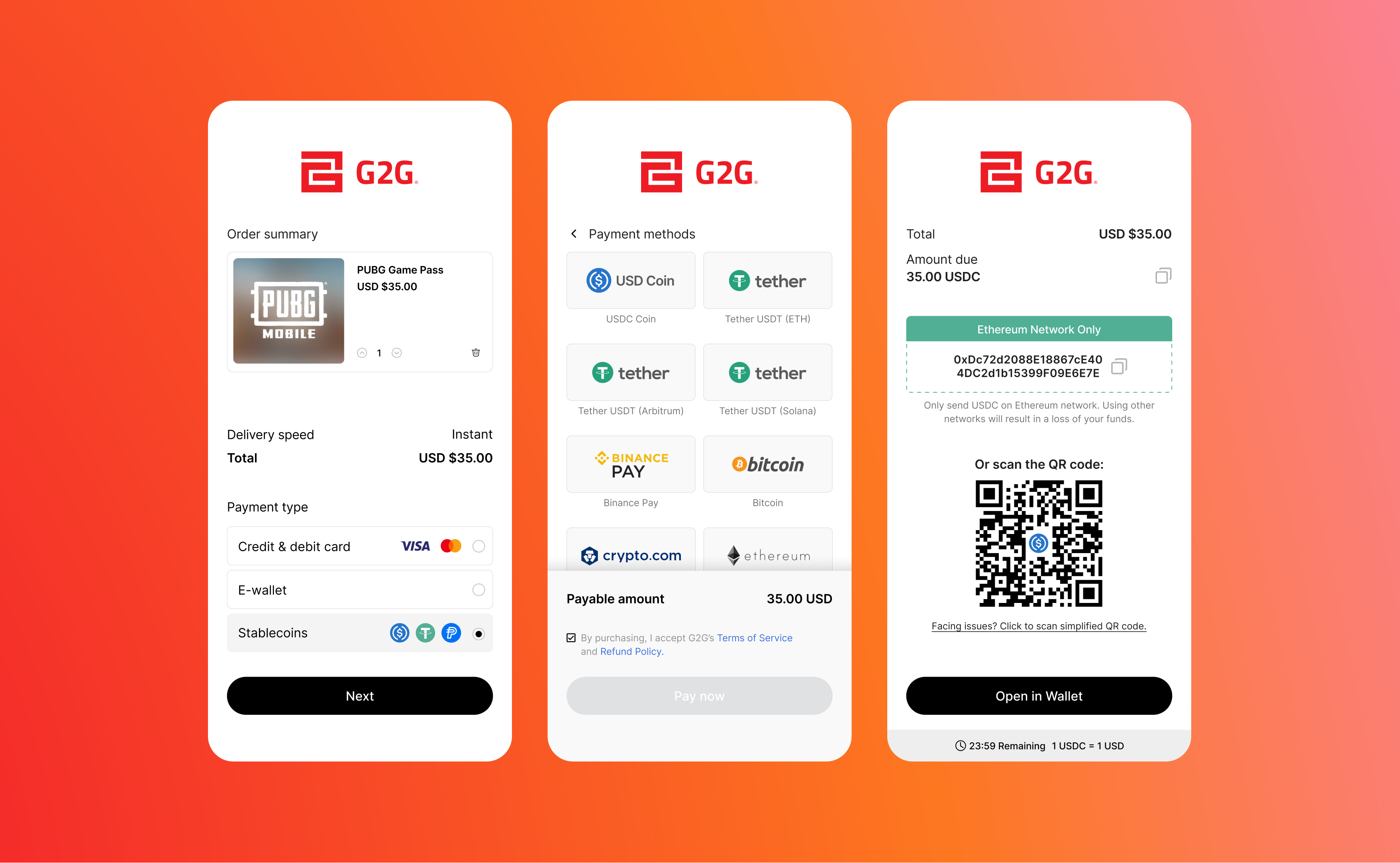
After adding digital currency as a payment method, the checkout flow remains straightforward.
0) The customer chooses the product or service they want to purchase and proceeds to checkout.
1) They select digital currency as their payment method.
2) The customer then chooses a supported currency and blockchain network.
3) A QR code and payment details are displayed.
The customer opens their digital wallet, reviews the transaction, and confirms the payment.
Once the payment is confirmed, both the merchant and customer receive confirmation that the transaction has been completed.
The merchant can then see the transaction and settlement information through its payment dashboard or API.
Why do businesses accept digital currency payments?
For many businesses, digital currency is an additional payment method, not a replacement for cards, bank transfers, or local payment methods. It can be particularly useful for companies selling internationally.
Reach digital currency owners globally
Hundreds of millions of people worldwide own digital currencies. Adding digital currency payments gives businesses another way to serve customers who already hold these assets, including customers in markets where international card access may be limited.
Reduce chargeback exposure
Blockchain transactions do not use the traditional card chargeback system. This can reduce chargeback exposure for merchants, while refunds can still be managed through the payment provider.
Accept payments across borders
Digital currency transactions can move across blockchain networks without relying on traditional correspondent banking infrastructure. That makes them particularly relevant for international businesses and customers.
Receive local currency
Businesses do not necessarily need to hold digital currencies themselves. A regulated payment provider can process the digital currency payment and settle the merchant in its preferred local currency.
Operate beyond banking hours
Blockchain networks operate 24/7, including weekends and bank holidays. Customers can therefore make payments without being constrained by bank opening hours or international payment cut-off times.
How do customers benefit from digital currency payments?
For customers who already hold digital currencies, paying directly from their wallet can remove the need to convert those assets into traditional currency before making a purchase.
It can also offer another option for customers who have difficulty using international cards or accessing certain traditional payment methods.
Customers can make payments from a supported wallet regardless of location, as long as the transaction complies with the merchant's and payment provider's requirements.
Do businesses need to hold digital currencies to accept them?
No. With a payment provider such as Triple-A, the customer can pay using a supported digital currency while the merchant receives settlement in local currency.
The payment provider manages the blockchain transaction, conversion, and settlement process.
This allows businesses to add digital currency payments without introducing digital asset custody or wallet management into their own operations.
How to start accepting digital currency payments
Businesses can integrate digital currency payments through a hosted checkout, embedded checkout, API, payment links, or invoices.
The right setup depends on the business model, checkout experience, and transaction type.
For an e-commerce business, digital currency can sit alongside existing payment methods at checkout. For B2B transactions or higher-value purchases, invoice or payment-link flows may be more appropriate.
Ready to start accepting stablecoin and digital currency payments? Talk to the Triple-A team to find the right integration for your business.