How the stablecoin sandwich is set to transform in cross-border payments
Traditional cross-border payments cost time, money, and transparency. SWIFT wires take two to five business days. Intermediary banks each add their own fees and currency conversion markup. Bank transfers can cost around ~3–7% depending on the corridor and provider. And tracking a payment between banks is often guesswork.
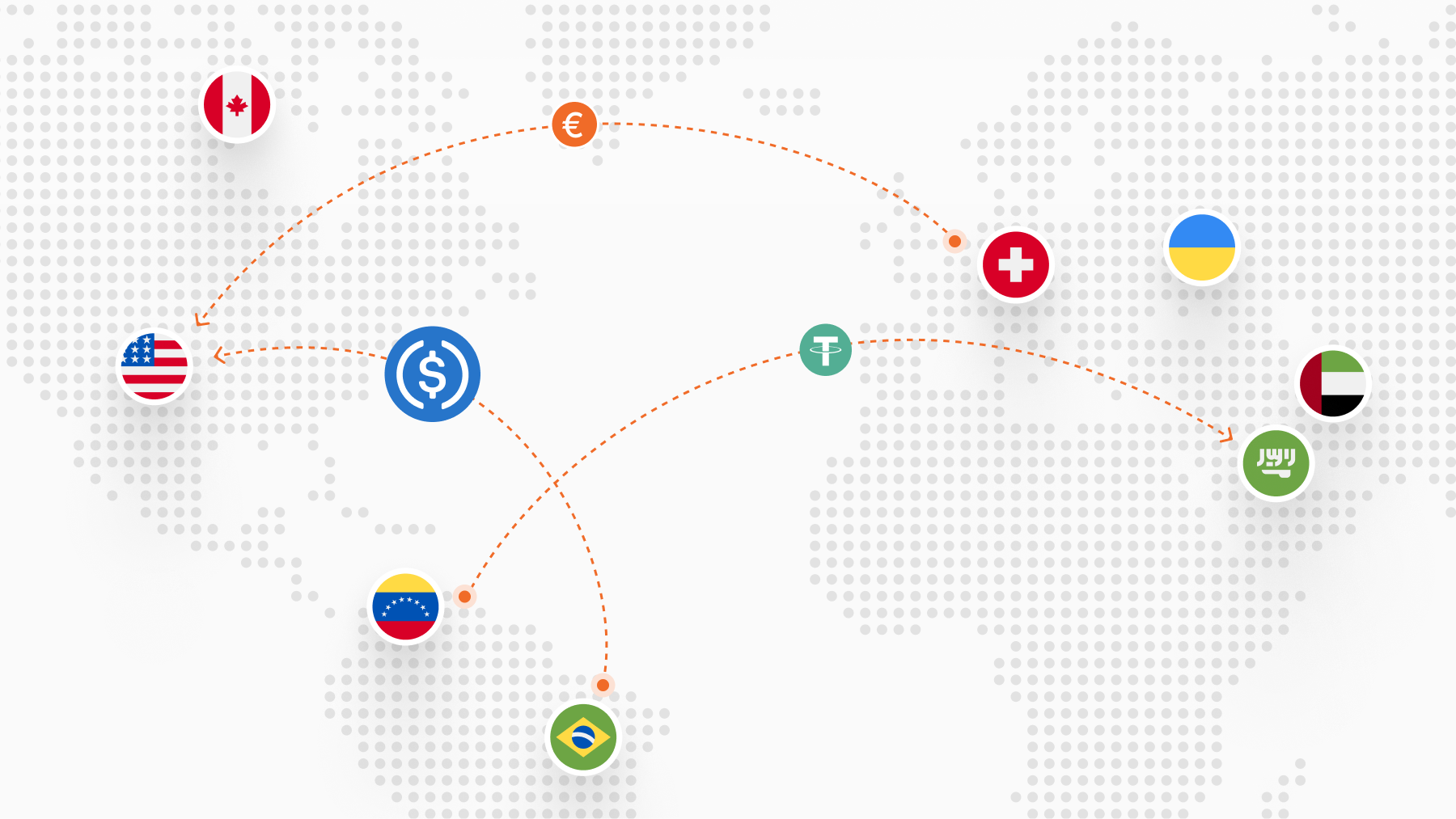
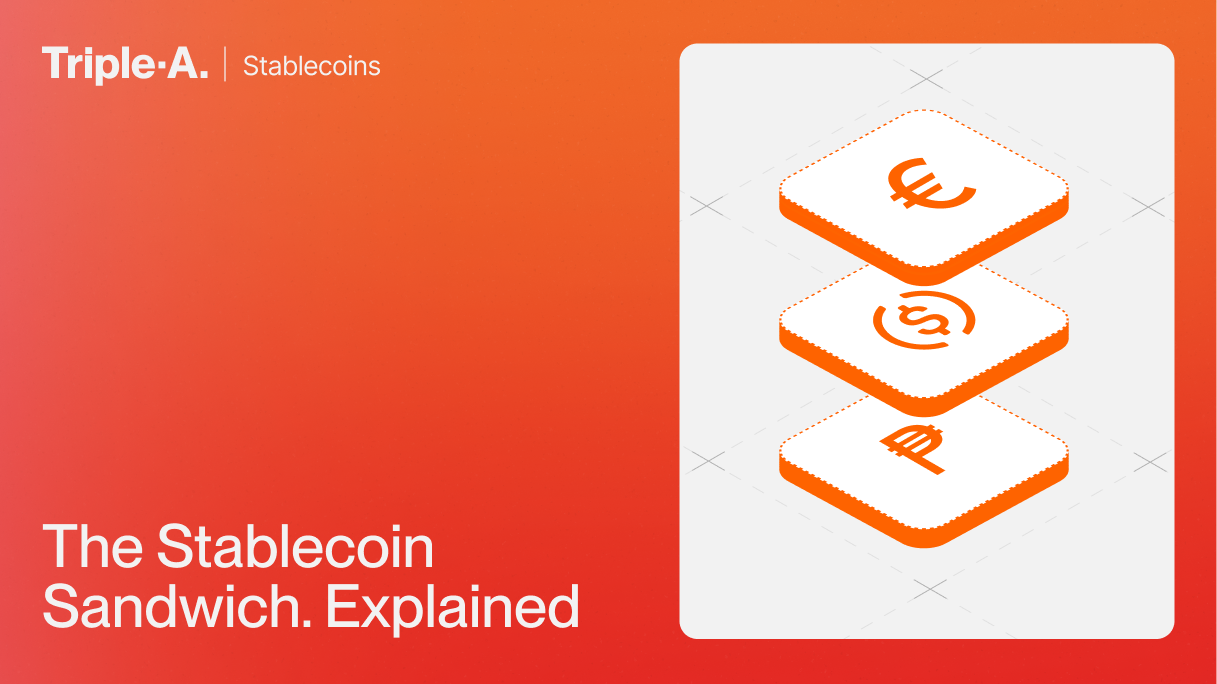
The “stablecoin sandwich” is quickly emerging as the solution. This is a cross-border payment model where the sender pays in their local currency, the money travels across a blockchain as a stablecoin, and the recipient receives payment in their local currency – often at near-instant speeds. In simple terms: sender’s local currency → stablecoin → recipient’s local currency.
The best part? There are no slow, expensive intermediaries in between.
What’s ahead:
- What is a stablecoin sandwich?
- Benefits of the stablecoin sandwich
- Use cases and real-world adoption
What is a stablecoin sandwich?
A stablecoin sandwich is a cross-border payment that works in three steps:
- The sender pays in their local currency, e.g., euro
- That local currency is converted into stablecoins and transferred on the blockchain
- Stablecoins are converted into the destination local currency, e.g., Brazilian real, to be collected by the recipient.
In other words, a stablecoin sandwich places local currency on both ends, with a stablecoin in the middle.
A key factor here is that neither the sender nor recipient needs to deal with stablecoins. The sender can convert their local currency with a licensed payment provider, and the recipient receives payment in their preferred currency. The stablecoin layer operates entirely behind the scenes.
A variation of the stablecoin sandwich – the "open sandwich", or also so-called, the "stablecoin toast” – allows the recipient to accept stablecoins, which they hold in a digital wallet and convert as needed. The “open sandwich”, then, is simply a 2-step framework:
- The sender pays in local currency
- That local currency is converted into stablecoins and transferred on the blockchain to the recipient’s digital wallet
This is a particularly popular option for contractor and creator payouts in emerging markets. Recipients may prefer to hold dollar-denominated assets rather than converting directly to a more volatile currency, such as Nigerian naira (NGN), Argentine peso (ARS), or Turkish lira (TRY).
What are the benefits of the stablecoin sandwich?
The stablecoin sandwich addresses every aspect of cross-border payments that businesses today find challenging:
- Speed
- Cost
- Transparency
- Liquidity
- Scalability
Increased speed of settlement
Traditional wires typically take two to five business days to settle – sometimes longer depending on the countries involved. Stablecoin transfers settle in minutes. Also, by being on the blockchain, which runs 24/7, that near-instant settlement time doesn’t change, since there are no cutoff times, bank holidays, or weekend delays.
Decreased cost for cross-border payments
In a traditional wire transfer, intermediary banks charge a fee and a currency conversion markup. The stablecoin sandwich removes the banking middlemen, thereby reducing cost and complexity. Total costs in a stablecoin sandwich typically come in under 1%, compared to the ~5% global average for international transfers.
Greater transparency in every transaction
With traditional wires, payments are often difficult to track once they leave the sender's bank. Stablecoin transactions are recorded on a public blockchain. These ledgers give both sides real-time visibility into where a payment is at every step.
On-demand capital liquidity
Global companies often need to hold funds in multiple currencies and countries to make local payments. That ties up working capital that is needed for business growth and profitability. The stablecoin sandwich provides a single, flexible reserve of stablecoins that can be converted into any local currency at the time of payment. This eliminates the need to pre-fund accounts in different markets and frees up working capital for businesses.
Scalable access to new and emerging markets
Businesses expanding into new markets often have to integrate local payment methods country by country and manage multiple partner relationships, which can be a major operational challenge. The stablecoin sandwich works for the business the same way whichever countries are involved. Businesses can use just one payment model that scales globally. All that’s needed is a licensed payment provider on each end.
Use cases and real-world adoption
The stablecoin sandwich is already being implemented effectively across a number of major payment scenarios:
- Cross-border B2B payments
- International payouts for contractors, vendors, freelancers, and creators
- Liquidity and treasury management
Cross-border B2B payments
Exporters, importers, ecommerce organizations, SMBs, and others typically rely on SWIFT wires when paying suppliers in other countries. These traditional bank transfers can take days to process, carry FX and additional fees from intermediatories, and tie up working capital while payments are in transit.
The stablecoin sandwich streamlines this process by:
- Using a single, simple transfer
- Settling in minutes
- Predictable and low pricing.
Visa has been an industry leader in adopting stablecoin for these kinds of business payments. The company began piloting stablecoin settlement in 2023, and by late 2025, it was on track to process $3.5 billion in stablecoin settlements annually. It also launched a Stablecoins Advisory Practice to help banks, fintechs, and businesses build their own stablecoin strategies.
International payouts for contractors, freelancers, and creators
Every time a business pays international contractors, vendors, freelancers, and creators, the costs and friction add up. Smaller payment amounts mean fees eat up a larger share, exchange rate markups at every step reduce what recipients actually receive, and recipients often have to wait days for funds to arrive.
The stablecoin sandwich solves these challenges by:
- Settling payouts in minutes
- Paying recipients in markets where traditional banking infrastructure is limited
- Reducing fees to a fraction of conventional methods
- Avoiding the exchange rate markups of traditional banks
Treasury management and liquidity
Global finance teams often need to move and hold cash across multiple currencies, bank accounts, and time zones. The operational challenges of this can quickly stack up – idle funds waiting for banking windows, currency conversion costs, poor visibility into real-time cash positions.
The stablecoin sandwich give treasury teams a better way to move funds between entities or regions by:
- Completing transfers in minutes
- Reducing currency exposure by holding dollar-denominated stablecoins until local conversion is needed
- Tracking positions in real time without waiting for end-of-day reconciliation
In fact, 44% of institutions say that their main use of stablecoin is forcross-border treasury and liquidity management, according to a recent EY survey.
Start Taking Advantage of the Stablecoin Sandwich
The stablecoin sandwich is already reshaping how businesses move money across borders, using a model that settles in minutes, costs a fraction of traditional methods, and scales globally through a single integration.
Triple-A is a licensed payment institution in the US, EU, Singapore, and Canada that lets businesses collect and send payments using stablecoins – without holding, managing, or converting digital assets directly.
Whether you're accepting payments at checkout, settling supplier invoices, or sending payouts to contractors worldwide, get in touch with our team to set up stablecoin-powered payment flows for your business.
FAQs
What is the stablecoin sandwich?
The stablecoin sandwich is a cross-border payment model where the sender pays in their local currency, the payment travels across a blockchain as a stablecoin, and the recipient receives the payment in their own local currency
The stablecoin layer replaces intermediary banks of traditional international payments systems – making transfers faster, cheaper, and more transparent. The stablecoin layer operates entirely behind the scenes, so neither the sender nor the recipient needs to handle stablecoins.
What are the benefits of the stablecoin sandwich?
The stablecoin sandwich addresses the core challenges of cross-border payments: speed, cost, transparency, liquidity, and scalability.
Transfers settle in minutes instead of days, with no cutoff times, banking holidays, or weekend delays. Total costs typically come in at under 1%, compared to the global average of 5%. Every transaction is tracked in real time on the blockchain for greater transparency. Stablecoins keep working capital liquid even across multiple countries, acting as a single, flexible reserve that converts to local currency on demand. And the model scales globally without requiring separate banking relationships or payment integrations market by market.
Is the stablecoin sandwich safe and regulated?
Yes, the stablecoin sandwich is safe when operated through licensed payment infrastructure.
The on-ramp and off-ramp steps (where local currency converts to and from stablecoins) are handled by licensed providers that perform identity verification, anti-money laundering checks, and sanctions screening. Regulatory frameworks such as the GENIUS Act in the US, MiCA in the EU, and the MAS stablecoin framework in Singapore all set clear requirements for stablecoin issuers around reserve backing, disclosure, and redemption rights.
What stablecoins are used in the stablecoin sandwich?
Most stablecoin sandwich payments use USD-pegged stablecoins: primarily Tether (USDT) and Circle (USDC), which together account for the vast majority of stablecoin transaction volume.
Other types of stablecoins – for example, PayPal USD (PYUSD) and Ripple (RLUSD) – are also gaining traction. The best choice depends on the countries involved, the available liquidity, and the regulatory requirements of each payment corridor.
How is the stablecoin sandwich different from sending cryptocurrency?
When someone sends cryptocurrency, both the sender and receiver typically need to hold and manage digital assets directly. In the stablecoin sandwich, neither side touches crypto. The sender pays in their own local currency, and the recipient receives it in theirs. A licensed payment provider handles the stablecoin conversion and transfer in between.
The stablecoin is used solely as settlement infrastructure, not as a payment method that the payer or payee interacts with.