Stablecoin Cross-Border Payments Explained
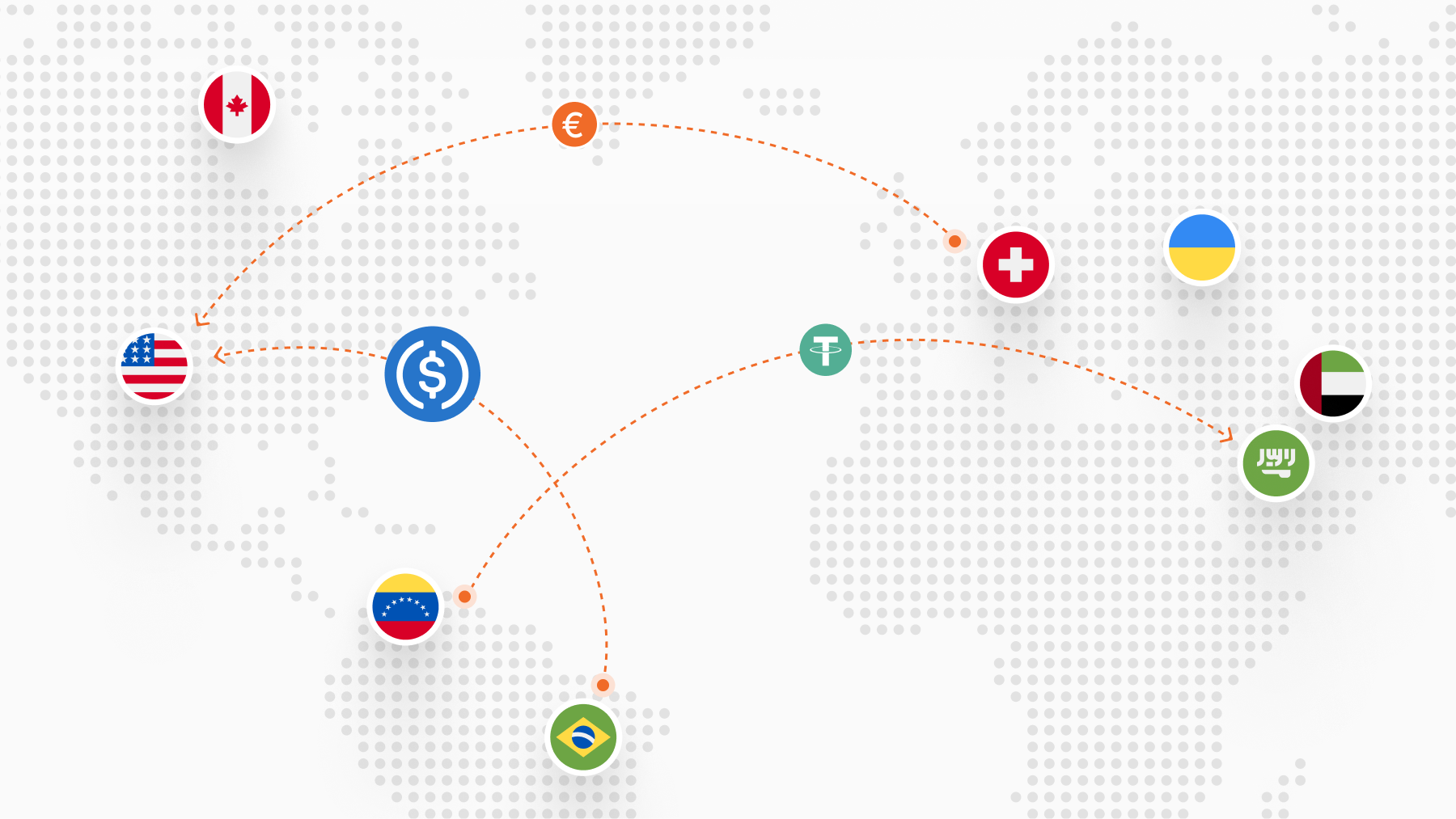
Five years ago, moving money across borders typically meant SWIFT messages, correspondent banks, and waits of three to five days. That picture is changing, corridor by corridor.
Regulatory clarity from frameworks like the GENIUS Act in the US and MiCA in the EU has turned stablecoins into practical settlement infrastructure. At the same time, major payment networks including Visa, Stripe, and Mastercard are building stablecoin rails directly into their systems.
Stablecoins are not replacing SWIFT outright. The shift is happening corridor by corridor, with correspondent banking still handling large, documentation-heavy flows. But while the underlying technology improved the speed of transfers years ago, stablecoin infrastructure and regulation are now making that speed practical for everyday business use.
This doesn’t mean businesses need to become fluent in blockchain or hold stablecoins on their own balance sheets. With a regulated payment partner handling the conversion and compliance between the sender and the settlement layer, stablecoins offer businesses a faster, cheaper payment without a new asset to manage. To see why that matters, it helps to look at what cross-border payments actually cost businesses today.
The challenges businesses face today
If your business sends money across borders, you may encounter friction in four areas: speed, cost, predictability, and transparency.
- Speed. Settlement through correspondent banking typically takes two to five business days, since each leg of the payment has to be cleared through the intermediary banks.
- Cost. Total fees can reach two to seven percent once foreign exchange (FX) charges are included, with each bank in the chain adding its own fees.
- Predictability. A payment can pass through as many as five intermediary banks, any one of which can hold or delay funds without warning.
- Transparency. Senders typically have little real-time visibility into where their money is until the transaction is complete.
Currency fluctuations and local compliance requirements can add further cost and complexity.

Stablecoin vs traditional cross-border rails
The table below gives a side-by-side comparison of the practical differences between correspondent banking and stablecoin payments across key factors.
Stablecoins vs cross-border payment platforms
The table above compares stablecoins with correspondent banking, the slowest of traditional options.
The picture looks different when compared to cross-border platforms such as Airwallex, Payoneer, and Wise. These already solve much of SWIFT's speed and cost problem by routing payments over local rails instead. However, the pricing and speed of these options depend on local banking relationships and licenses in each of the corridors they serve. These can take years to build and don't apply evenly across every market.
Stablecoins take a different route. If a recipient accepts direct stablecoin payments, they can skip the conversion step entirely. This is becoming more common as people get more comfortable with stablecoin payments and holding dollar-pegged savings rather than converting immediately into their own currency. Part of that new comfort with stablecoins comes down to sheer reach: 741 million people worldwide held cryptocurrency by the end of 2025, up from 659 million the year before. That growing pool of recipients is already set up to hold and use stablecoins directly.
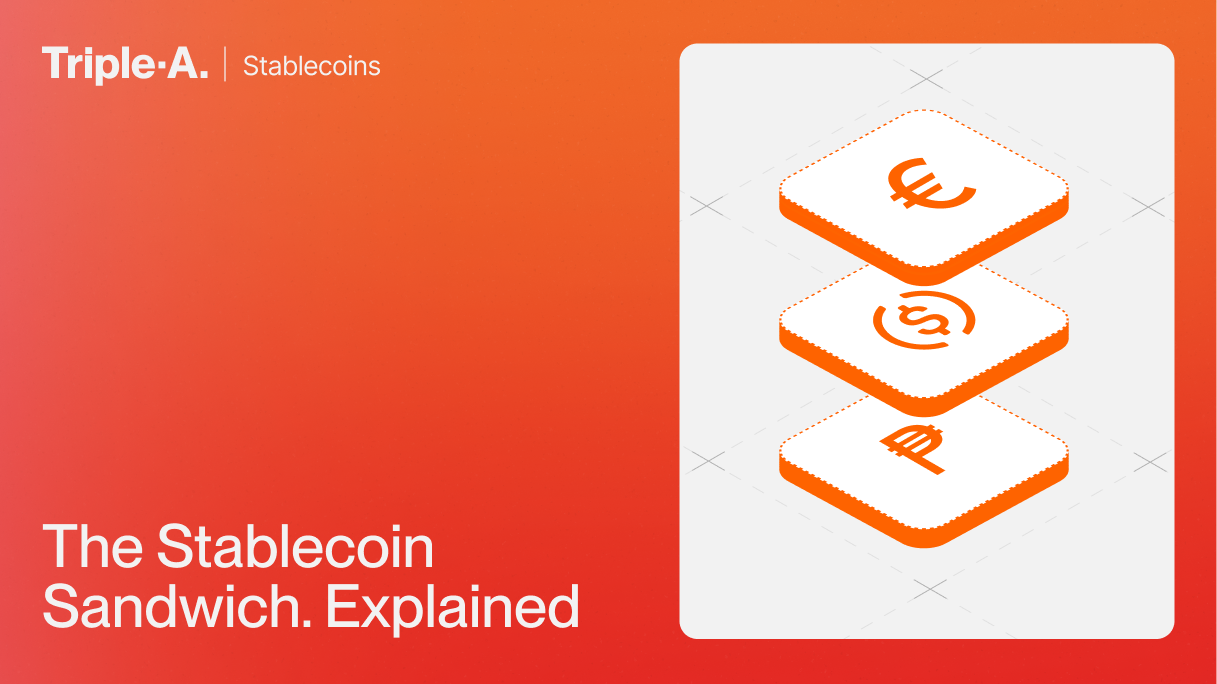
For those who still prefer local currency, a hybrid model like the stablecoin sandwich, apply the same idea. A stablecoin layer replaces the slow, multi-bank middle section of the payment process. In this way, the conversion into local currency just happens once at the end rather than at every step along the way.
The practical result is that stablecoins offer an advantage similar to what fintech platforms already provide, without needing to first build local banking relationships in every corridor. That advantage is clearest where correspondent banking in the middle is the slowest and most expensive part of the payment, rather than the local currency conversion itself.
Stablecoins aren't a replacement for SWIFT or local banking rails: they are a connector between them. Most cross-border payments still start or end in local currency, moving into a stablecoin on one side and back out on the other. What a stablecoin adds is speed and lower cost in that middle stretch, not an escape from traditional rails altogether.
Why stablecoin adoption is accelerating
A few years ago, many businesses stayed away from stablecoins because of concerns about fraud, money laundering and broader risks with the crypto market. That hesitation has largely faded. Today, businesses are increasingly focused on the opportunity stablecoins offer than on the risks that previously held them back.
In emerging markets across Africa, the Philippines, and Indonesia, merchants already use stablecoins as a practical tool against local currency volatility, similar to their shift from cash to digital wallets like M-Pesa and GCash. What has been missing for wider business adoption has been institutional legitimacy: regulated platforms with clear rules that allow companies to use stablecoins with greater confidence.
The numbers back that shift up, although it's important to understand the nuance. FXC Intelligence estimates that the total addressable market for stablecoin cross-border payments could reach $17.9 trillion, largely in emerging market corridors. Meanwhile, 90% of financial institutions report taking some action on stablecoins — whether through planning, piloting, or live deployments.
That said, it’s still early in the adoption phase. FXC Intelligence estimates that stablecoins still account for less than 1% of cross-border payments, even as many providers report year-over-year growth rates above 100% . This gap reflects a market still moving from isolated pilots to widespread adoption. While stablecoins offer powerful advantages, they have not yet become the default infrastructure.
The core advantages of stablecoins
Most of what makes stablecoins useful for cross-border payments comes down to what they take out of the process — the delays of correspondent banking, the layered fees, and the uncertainty of traditional payment routes.
Each of the following advantages follows from that one structural change.
- Always-on timing: Stablecoin transactions settle in minutes rather than the three to five days typical of many correspondent banking routes. Funds remain available, removing a main source of delay for cross-border payments.
- Working capital accessibility: Businesses moving money across several markets often need to prefund local accounts to cover payments before they clear, tying up valuable capital. Stablecoins settle in minutes instead of days, reducing the need for that buffer.
- Lower cost: A stablecoin transfer costs a network fee, often just a few cents.A correspondent banking route by comparison involves several stacked charges: a wire fee, an FX markup, and a cut taken by each intermediary bank. Remittance corridors average close to 6.5% in total fees, showing how much of that avoidable cost is embedded in traditional cross-border payment structures.
- Currency handling: Paying someone in the currency they actually use, rather than converting twice through intermediary currencies, removes one of the hidden costs of cross-border payments: the spread charged on an unnecessary conversion.
- Finality: A settled stablecoin transaction generally can't be reversed or charged back. This cuts out a category of fraud and dispute handling that traditional payment rails still carry. The tradeoff is that the same finality applies to mistakes. A transfer sent to the wrong address can’t be simply undone. This means address verification matters more with stablecoins than with a reversible bank transfer.
- Reserve transparency: Regulated stablecoins are typically backed by reserves, such as USDC’s 1:1 backing in US Treasury holdings. Regulatory frameworks such as the GENIUS Act in the US, MiCA in the EU, and the Payment Services Act in Singapore, reinforce that backing with requirements around reserve composition and disclosure, giving stablecoin users greater clarity and security.
- Recordkeeping. Stablecoins run on blockchain infrastructure that makes transactions traceable and visible in a way that traditional correspondent banking do not. Every transfer is recorded on a shared ledger that both sender and recipient can see, so reconciliation clarity doesn’t depend on a confirmation email.
Risk and compliance considerations
Adopting stablecoins comes with practical challenges beyond payment mechanics, and businesses need to understand them rather than assuming a provider has already addressed them.
- Multiple types of stablecoins and blockchains: Stablecoins differ by issuer, reserves, and the currency they're pegged to. They run on different blockchains with varying fees and settlement speeds. The wrong combination can lead to higher costs, slower transfers, or difficulties converting funds or paying recipients in a particular corridor. Choosing a stablecoin and network with strong liquidity and local support matters as much as deciding to use stablecoins in the first place.
- Reserve and price stability: A stablecoin is only as reliable as the assets and redemption mechanism behind it. It's worth checking how often the issuer publishes reserve attestations, how those reserves are held, and whether the issuer has a proven track record. A stablecoin with weaker reserves may be less resilient during periods of market stress, which makes this due diligence as important as the decision to use stablecoins at all. To find out how the major options compare on these points, check out our breakdown of the best stablecoin for payments.
- Wallets and private keys: Holding stablecoins directly means managing digital wallets and the private keys that control them. There's no password reset if a key is lost, and a transfer sent to the wrong address can't be recovered. This creates a different operational risk profile than a traditional bank account.
- Regulatory compliance: Rules differ by jurisdiction and many markets are still catching up. The GENIUS Act, MiCA, and MAS in Singapore cover some of the key global corridors, but a business operating across multiple regions still needs to understand the local requirements.
- Anti-Money Laundering and compliance: Stablecoin payments are subject to the same obligations as to any other regulated payment method. Customer due diligence, transaction monitoring, and applicable Travel Rule requirements need to be taken into account, and mechanisms such as the GENIUS Act and Financial Action Task Force exist to ensure compliance.
None of these are reasons to avoid stablecoins. But they do explain why many businesses opt to work with a regulated partner rather than building the infrastructure themselves. A partner licensed directly under these frameworks can manage the compliance requirements, handle custody so businesses don’t have to handle private keys directly, and convert between stablecoins and local currencies at either end of the transaction.
Where adoption goes from here
Stablecoins won't replace local currency payouts in the short term. But as regulation matures and operations become more frictionless, adoption is likely to move from a corridor-by-corridor choice to the standard option for cross-border payments.
The scale of the opportunity seems only to be growing. A joint analysis by McKinsey and Artemis Analytics found that real stablecoin payment volume more than doubled between 2024 and 2025, excluding trading and internal transfers. Multiple financial institutions and the US Treasury now project stablecoin supply to reach between $2–4 trillion by 2030, up from roughly $300 billion today. Reaching that scale depends on three things already in motion: mature regulatory frameworks across more markets, financial institutions moving from pilots to live deployments, and custody, conversion, and compliance becoming routine services rather than specialist capabilities.
How Triple-A can help manage your cross-border payments
The case for stablecoins comes down to three benefits happening at once: rapid settlement that isn't held up by banking cutoff times, less working capital sitting idle in prefunded accounts, and a payment that both sides can actually track. Lower costs are part of the picture too, but for many businesses, speed and improved cash flow are the biggest day-to-day benefits.
Getting those benefits requires more than choosing the right stablecoin. It means handling the local currency conversion, meeting AML and licensing requirements across every market involved, and managing custody of digital assets and private keys. That’s why many businesses adopt stablecoin payments through a regulated partner rather than building the infrastructure themselves.
With Triple-A, businesses can pay contractors, vendors, employees, freelancers, or content creators directly in stablecoins, globally and in near-real time. We provide the regulated infrastructure to allow you to adopt stablecoin payments without you having to handle the complexity. With Triple-A, you get:
- Near-real-time payouts with no need to hold stablecoins
- Seamless cross-border payments, ideal for emerging markets
- Low-cost payments, for a fraction of a dollar each
- Secure management of digital wallets and private keys
- No volatility risk when scaling your business
- Customizable, white-label dashboards
And since Triple-A is regulated and licensed in Singapore, the EU, Canada and the US with 20+ US Money Transmitter Licenses, you can trust that your stablecoin payments are safe and secure in our hands.

Ready to explore stablecoin cross-border payments? Get in touch with our team to talk through how Triple-A can support your business.
FAQs
What are stablecoin cross-border payments?
Stablecoin cross-border payments use a stablecoin (a digital currency pegged 1:1 to a currency such as the US dollar or euro) to make international payments, instead of using the traditional correspondent banking network. The stablecoin settles on the blockchain within minutes and can be converted to local currency on either end.
How does a stablecoin cross-border payment work?
A business sends local currency to a payment partner, who converts it into a stablecoin and sends it directly to the recipient's wallet. The transfer typically settles within minutes. On the other end, the recipient can hold the stablecoin, or the partner can convert it back into local currency and deposit it into the recipient's bank account.
Is it legal for a business to use stablecoins for cross-border payments?
Yes, in many major markets such as the US, EU, UK, and Singapore, provided the stablecoin and the payment partner are properly regulated. A small number of countries restrict or prohibit their use, so it's worth checking the rules in every market a payment touches.
Does a business need its own license to use stablecoins for payments?
Generally no. Licensing requirements apply to activities such as holding customer funds, converting between stablecoins and local currency, or operating a payment service. Those activities are typically handled by a regulated payment partner rather than the business itself.
Does a business need to hold stablecoins to use them for payments?
No. A regulated payment partner can convert local currency into a stablecoin to send a payment, then convert it back into local currency on the receiving end, so the business never holds a stablecoin directly or is exposed to price fluctuations.
How much cheaper are stablecoin payments than a traditional wire?
Costs vary by corridor, but stablecoin transfers typically cost under 1%. By comparison, a correspondent banking wire may cost 2 to 7% once FX charges and intermediary fees are included.
Much of the savings come from removing intermediary banks from the settlement process. Faster settlement with no cutoff times is often as important for businesses than the cost, especially when working across multiple markets.
Can a stablecoin payment be reversed if it's sent by mistake?
No. Once a stablecoin transaction settles on the blockchain, it's final, and there's no chargeback mechanism as with a card payment. If a payout is sent to the wrong address, there's generally no way to retrieve it. The only option is to contact the addressee and ask them to return it voluntarily. However, this isn't possible if the recipient is unknown. This is why address verification is more important for stablecoin payouts than reversible bank transfers.
That said, some mistakes are recoverable: if the wrong token is sent to the right address (for instance USDC instead of USDT), Triple-A’s Support team can help resolve it.
Do businesses need to run their own KYC or AML checks to use stablecoins?
Generally no, when working with a licensed payment partner, since the partner screens and monitors transactions under its own compliance program. If a business holds and sends stablecoins directly from its own wallet, that responsibility falls on the business itself.